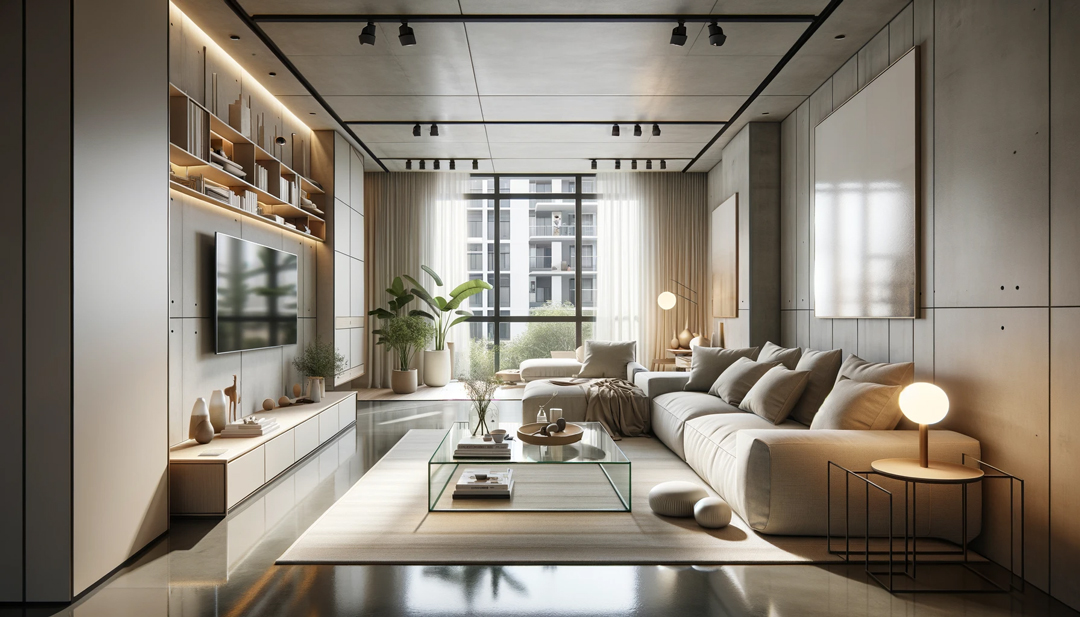
Contemporary interior design is an ever-evolving field, influenced by changes in technology, environmental concerns, and shifts in how we live and work. Modern design is about more than just creating stylish spaces; it’s about crafting environments that enhance human interaction, productivity, and sustainability.
1. Embracing Minimalism: The minimalist trend in modern design emphasizes “less is more,” focusing on the essentials rather than over-decoration. This philosophy helps in creating clutter-free spaces that are both functional and soothing. Minimalism isn’t just an aesthetic choice but a way of simplifying our environments to enhance our everyday living.
2. Integrating Technology: Modern spaces are increasingly integrated with technology, making them smarter and more efficient. From smart home systems that allow for automated climate control, lighting, and security to advanced materials that improve health and well-being, technology is becoming a fundamental aspect of design.
3. Sustainable Practices: Sustainability is a crucial element in modern design. This involves selecting materials that are durable and eco-friendly, designing with energy efficiency in mind, and minimizing waste. Such practices not only reduce environmental impact but also create spaces that are healthier for occupants.
4. Flexible Design Solutions: The dynamic nature of modern life calls for adaptable design solutions. Flexible spaces that can change function with minimal adjustment are becoming popular. This might include movable walls, multi-purpose furniture, or convertible areas that can shift from home offices to living spaces as needed.
5. Biophilic Design: Incorporating natural elements into indoor spaces, or biophilic design, has gained traction. This approach is based on the idea that humans have an innate connection to nature. By integrating natural light, vegetation, and materials that mimic the outdoors, designers can create more vibrant and energizing environments.
6. Cultural and Artistic Expression: Modern design is increasingly a medium for cultural expression. Designers are blending local art, crafts, and cultural motifs with contemporary aesthetics to create spaces that reflect global diversity. This not only enriches the design but also roots spaces in a specific cultural identity while appealing to universal sensibilities.